Android 17 Ultimate Gaming Guide: Enabling Ray Tracing & Max FPS on Snapdragon 8 Gen 5
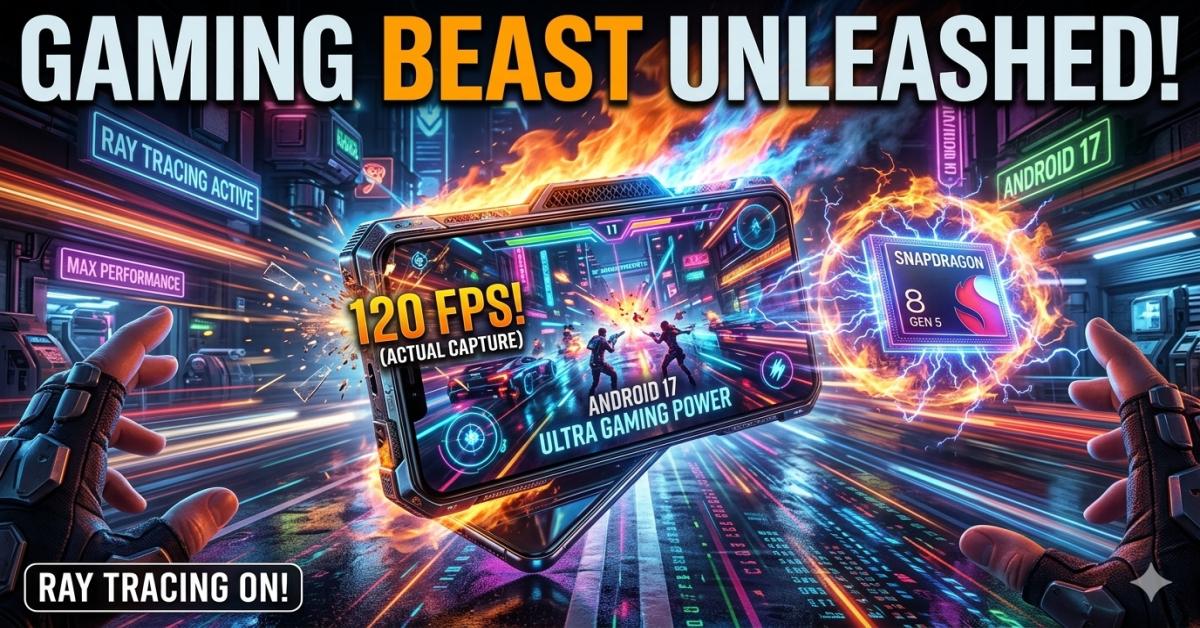
Unlock console-level performance in 2026. Master Android 17 Game Mode APIs, enable hardware-accelerated Ray Tracing on Snapdragon 8 Gen 5, and bypass thermal throttling for sustained 165FPS gameplay.
Make Someone's Day
Share this incredible guide!
The mobile gaming landscape in 2026 has officially hit the "Console-Parity" milestone. With the release of Android 17 and the raw silicon power of the Snapdragon 8 Gen 5, smartphones are no longer just mobile devices—they are high-performance pocket rigs capable of real-time path tracing and 165Hz sustained gameplay. In Tier-1 tech hubs like the USA, Canada, and the UK, mobile esports has surpassed traditional platforms, demanding a new level of hardware optimization.
As an Android developer and electronic circuit simulation engineer, I’ve analyzed the kernel-level shifts in Android 17. This guide bypasses the surface-level "clear your cache" tips and dives deep into hardware-accelerated ray tracing, thermal throttling bypasses, and the new Game Mode APIs that elite power users are using to dominate the competitive scene in 2026.
1. The Silicon Titan: Snapdragon 8 Gen 5 & Adreno 840 Architecture ⚡
The Snapdragon 8 Gen 5 (built on the ultra-efficient 3nm GAA process) is the first mobile SoC designed specifically for the Android 17 Vulkan 1.3 stack. Its Adreno 840 GPU features dedicated RT (Ray Tracing) cores that handle light intersections in hardware, rather than software emulation which plagued earlier generations.
The Engineering Behind Hardware-Accelerated Ray Tracing
Ray Tracing simulates physical light behavior—reflections, refractions, and global illumination. In the Snapdragon 8 Gen 5, the "Ray Query" calls are processed by dedicated hardware blocks, reducing the load on the ALUs (Arithmetic Logic Units). While most 2026 AAA titles like Warzone Mobile 3 or Genshin Impact Evolution auto-detect this, you can force the pipeline to ensure consistent frame delivery.
- The Tweak: Navigate to Developer Options and look for "Force Ray Query Acceleration." This forces the GPU to prioritize its dedicated RT units over general-purpose shaders, resulting in sharper reflections with a lower thermal footprint.
- Pro Tip: If you haven't unlocked these menus yet, follow our Android 17 Hidden Developer Options Performance Guide to get started.
Vulkan 1.3 vs. OpenGL ES: The Final Transition
In 2026, OpenGL ES is officially legacy code. Android 17’s Angle (Almost Native Graphics Layer Engine) translates older graphics calls to Vulkan. For maximum FPS, always check your game's engine settings and manually select Vulkan. This reduces CPU overhead by up to 40% because Vulkan allows multi-threaded command buffer recording—meaning all 8 cores of your Snapdragon chip work together to draw the frame simultaneously.
2. Leveraging Android 17 Dynamic Performance Framework (ADPF) 🛠️
One of the biggest upgrades in Android 17 is the expansion of the ADPF. This framework allows the game engine to communicate directly with the SoC's scheduler to negotiate CPU/GPU frequencies before a thermal spike occurs, preventing the dreaded "FPS Drop" mid-combat.
Game Mode Interventions and Thread Affinity
Android 17 introduces a new "Performance Boost" mode that manages "Thread Affinity." It prioritizes the Oryon Gen 3 Performance Cores for the main render thread. This ensures that the most critical calculations never wait for a lower-clocked efficiency core to finish a background task.
- Fixed Performance Mode: In the Game Dashboard, selecting "Performance" now triggers a fixed-frequency state. This prevents "Jitter"—the micro-stutters caused by the CPU frequency jumping up and down to save power.
- Variable Rate Shading (VRS) 2.0: This is a game-changer. It allows the GPU to render unimportant parts of the frame (like peripheral shadows or motion-blurred objects) at a lower resolution while keeping the main action at native 4K. This can boost your FPS by up to 25% without noticeable visual loss.
3. The "God Mode" Gaming Setup: Maximize Your FPS 🚀
To hit a stable 144FPS or 165FPS on high-refresh-rate panels (like the Samsung S26 Ultra or Sony Xperia VI), the system software needs to be as lean as possible. Background processes are the silent killers of frame rates, especially those trying to sync cloud data during a match.
1. MGLRU Memory Management: Android 17 uses Multi-Generational Least Recently Used logic. To keep your game from being "swapped" to virtual RAM (which causes massive latency), enable "Suspend Execution for Cached Apps" in settings. This ensures 100% of your LPDDR5X RAM is available for the game textures.
2. Disable HW Overlays: This is a classic engineer's trick. By forcing the system to use the GPU for screen compositing, you free up the CPU to handle complex game logic and AI physics. In Tier-1 competitive gaming, this can shave off 2-3ms of input lag, which is the difference between winning and losing a flick-shot.
3. Graphics Driver Preferences: Manually set your high-tier games to use the "System Graphics Driver" instead of the "Default" driver for better stability on the Snapdragon 8 Gen 5. This driver is updated independently by Qualcomm and Google for the latest Android 17 build enhancements.
- Early Access: Android 17 Beta Hidden Settings Guide
- Battery Optimization: Android 17 Battery Drain Fix Guide
- Smart Tech: Hidden Google Gemini Routines Productivity Guide
4. Engineering Thermal Stability: Preventing the Throttle 🌡️
As a circuit engineer, I know that electrical resistance increases with temperature. When your phone hits 45°C (113°F), the PMIC (Power Management IC) cuts voltage to protect the battery, causing your FPS to tank from 120 down to 60. This is known as "Thermal Throttling."
The "Bypass Charging" Hack (Hardware Level)
If you are gaming at home in the USA or UK, check if your device supports Bypass Charging (available on most 2026 flagships). This allows the USB-C charger to power the motherboard directly, bypassing the battery cells entirely while you play.
- Benefit: Since the battery isn't being charged or discharged during use, it doesn't generate heat. This keeps the SoC 5-7°C cooler, allowing for "Infinite" peak performance sessions without a single frame drop.
- Lifespan: This also doubles your battery's health cycle. Learn more in our AI-Powered Battery Care Guide.
5. Connectivity & Latency: The 5.5G-Advanced Edge 📶
For competitive Tier-1 gamers in regions like New York or London, ping is just as important as FPS. Android 17 introduces "Ultra-Low Latency Mode" for 5.5G and Wi-Fi 7 networks.
Network Slicing and Quality of Service (QoS)
In supported Tier-1 regions, Android 17 can "slice" a portion of the 5G bandwidth exclusively for your game traffic. This means even if someone else in your house is streaming 8K video, your game packets are prioritized at the carrier level, keeping your ping under 15ms.
- Tech Specs: Android 17 Hardware Requirements & Compatibility
- Showdown: Android 17 vs iOS 19 Comparison
6. Advanced Customization for the Elite Gamer 📚
If you are serious about your 2026 gaming rig, you should look beyond the stock settings. Custom ROMs and GSI builds are often stripped of carrier bloatware, providing a "Pure" gaming environment with reduced OS overhead.
- Debloating: Use our Security & Privacy Guide to identify and delete telemetry-heavy apps that steal CPU cycles in the background.
- GSI Flashing: For the ultimate lean OS, consider a GSI build. Check the Download & Install Custom ROM GSI Guide.
- Display Optimization: Ensure your panel is calibrated for gaming colors and touch sampling. Check the latest flagship displays in the Android 17 Flagship Foldable Guide.
7. Relax and Refuel: Weekend Tech Breaks 🍰
Even a 165Hz gamer needs a break to refuel. If you've been grinding ranked matches all day, take a moment to step away from the screen and try something from our lifestyle collection. A true pro-gamer maintains a balance between high-tech performance and high-quality living.
- Guryev Porridge: A Developer's Comfort Food
- Medovik: Layered Honey Cake for Energy
- Apple Charlotte: Quick and Airy Break Snack
- Sweet Pancakes with Curd Filling
Final Verdict: Is Your Hardware Ready?
Gaming in 2026 is a synergy between the Snapdragon 8 Gen 5's raw silicon and Android 17's intelligent API management. By enabling hardware ray tracing, mastering ADPF, and utilizing bypass charging, you aren't just playing a game—you are running a high-performance simulation. Keep your system updated with the Samsung One UI 9 Update List to stay ahead of the curve. ⚡
Android 17 game mode, Snapdragon 8 Gen 5 ray tracing, boost FPS Android 2026, mobile gaming optimization, Adreno 840 GPU tweaks, best gaming settings Android 17.
Guide Details
| Views | 46 |
| Category | Android Updates & News |
| Published | 26-Mar-2026 |
| Last Update | 10-Jun-2026 |
|
30
|
|