Snapdragon 8 Gen 6 Leak: How the 2nm Architecture Will Redefine Flagships in 2026
Exclusive leaks suggest Qualcomm's move to 2nm process technology will deliver a 30% efficiency boost. Discover how this "Rival Crusher" chip outpaces Apple’s A19 Pro and Samsung’s Exynos 2600.
Make Someone's Day
Share this incredible guide!
The 2nm Breakthrough: Qualcomm’s Secret Weapon Against Apple and Samsung
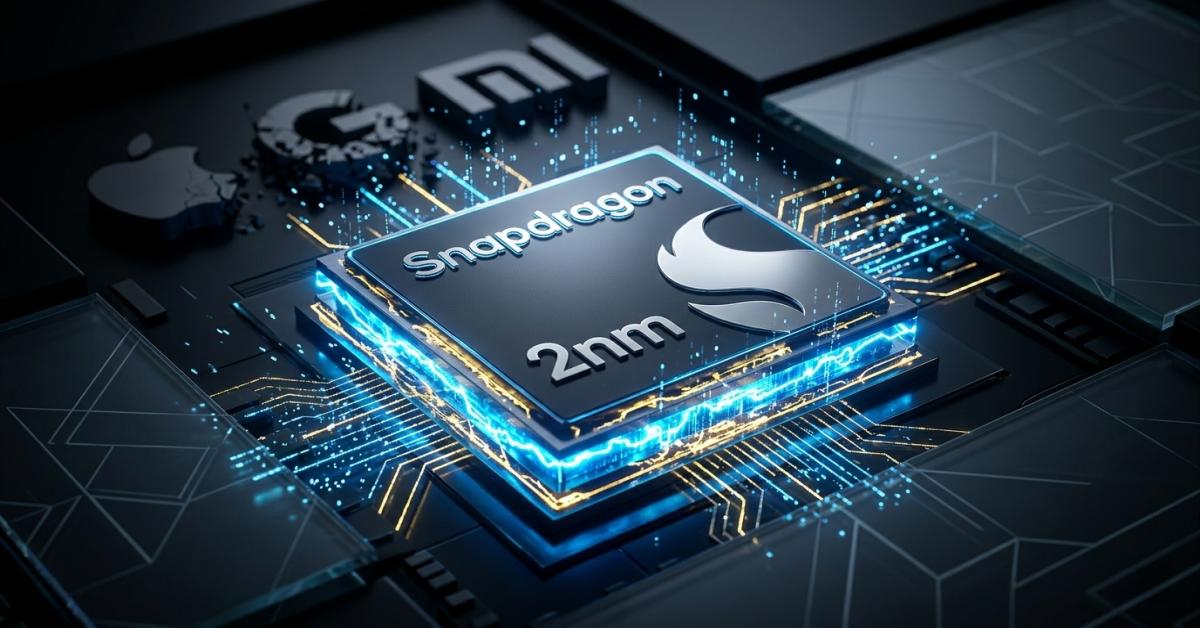
In the high-stakes world of mobile semiconductors, the race to the bottom—in terms of nanometers—is the ultimate pursuit of power. Recent leaks from the heart of the supply chain suggest that the upcoming Snapdragon 8 Gen 6, built on TSMC’s cutting-edge 2nm process node, is poised to shatter every existing benchmark record. This isn't just an incremental update; it is a fundamental shift in how silicon handles data, heat, and artificial intelligence.
For users in Tier-1 markets like the United States, UK, and Australia, this means smartphones that don't just last all day but potentially multi-day on a single charge while delivering console-level graphics. As we approach the official launch window, the leaked specifications indicate that Qualcomm is finally in a position to "crush" its rivals, specifically targeting the projected Apple A19 Pro and Samsung’s internal Exynos efforts.
Essential Reading for Tech Enthusiasts
- Next-Gen OS: Android 17: Complete Guide to New Features
- Gaming Performance: Snapdragon 8 Gen 5 Gaming Optimization Guide
- Hardware Readiness: Android 17 Hardware Compatibility List
1. The Science of 2nm: Why Smaller Means Deadlier
The term "2nm" refers to the gate-all-around (GAA) transistor architecture. In previous generations (3nm and 5nm), FinFET technology was the standard. However, as we shrink further, the physical limitations of silicon cause "electron leakage," leading to heat. The Snapdragon 2nm leak confirms that Qualcomm is moving to a Nanosheet FET design, which provides better control over the channel, virtually eliminating waste heat.
Projected Performance Metrics
Early leaked geekbench scores for the Snapdragon 8 Gen 6 (2nm) suggest a single-core score exceeding 3,500 and a multi-core score nearing 12,000. For comparison, current 3nm chips struggle to break the 10,000 multi-core barrier without significant thermal throttling.
- 30% Increase in Power Efficiency: Allowing for thinner devices with smaller batteries that last longer.
- 15% Improvement in Clock Speeds: The "Prime" cores are rumored to hit a staggering 4.2GHz.
- Advanced Thermal Ceiling: Sustained performance for hours during intensive tasks like 8K video editing or AR gaming.
2. Crushing the Competition: Apple A19 Pro vs. Snapdragon 8 Gen 6
For the last decade, Apple’s "A-series" chips have held a comfortable lead in single-core performance. However, the 2nm Snapdragon leak indicates that Qualcomm’s custom Oryon 2.0 Cores are designed to bridge this gap. By leveraging the more advanced 2nm node ahead of Apple’s full transition, Qualcomm may actually hold the "Performance-per-Watt" crown for the first time since the Snapdragon 835 era.
Samsung Galaxy S27 Ultra (the projected recipient of this chip) will likely utilize a "For Galaxy" overclocked version of this 2nm silicon. This creates a massive hardware advantage over the iPhone 17 Pro Max, particularly in multi-threaded tasks and AI-driven computational photography.
3. The AI Engine: Generative AI at the Silicon Level
Android 17 is heavily reliant on system-level AI. To support this, the 2nm chipset includes a dedicated Hexagon Tensor Processor that is 40% faster than its predecessor. This allows for real-time video translation, generative photo editing, and sophisticated AI-powered battery care without needing to connect to the cloud.
Key AI Features Enabled by 2nm:
- On-Device LLMs: Run 10-billion parameter models locally for instant, private assistant responses.
- Real-Time Ray Tracing: Enhance mobile gaming with lighting that rivals the PlayStation 5.
- Semantic Segmentation: Recognizing objects in a video feed instantly for advanced AR applications.
Maximize Your Current Device
While waiting for the 2nm revolution, you can optimize your current flagship's battery life using our AI-Powered Battery Care Guide to ensure your hardware survives until the 2026 upgrade cycle.
4. Impact on the 2026 Flagship Market
The 2nm chip isn't just about speed; it's about enabling new form factors. We expect foldable phones in 2026 to become significantly thinner because the 2nm Snapdragon chip requires less bulky cooling solutions (vapor chambers). This will be a major selling point in Tier-1 countries where users demand premium aesthetics alongside power.
Leaks suggest that brands like Sony, OnePlus, and Samsung are already testing prototype boards with the 8 Gen 6. Sony, in particular, is rumored to be using the chip to power a new "Creator Edition" Xperia that can handle 4K 120FPS RAW video recording without overheating—a feat currently impossible on 3nm hardware.
5. Connectivity: Beyond 5G with the X85 Modem
Integral to the 2nm leak is the inclusion of the Snapdragon X85 5G Modem-RF System. This is the world’s first modem with integrated AI-native 5G. It can predict signal drops and switch to the best frequency before the user even notices a slowdown. Furthermore, it fully supports the Android 17 Satellite-to-Cell standards for emergency communication in remote areas of Canada, the US, and Australia.
Relevant Hardware Guides
- Satellite Tech: Android 17 Satellite Messaging Guide
- Wearable Sync: Wear OS 6 and Android 17 Integration
- Developer Tweaks: Hidden Developer Settings for Performance
Conclusion: Is the 2nm Snapdragon Worth the Wait?
If the Snapdragon 2nm leaks hold true, the 2026 smartphone cycle will be the most significant upgrade year in a decade. The combination of Nanosheet transistors, Oryon 2.0 cores, and Android 17's AI framework will create a "Rival Crusher" that forces Apple and Samsung to rethink their entire hardware strategies.
For consumers in the US, UK, Canada, and Australia, the advice is clear: if you are planning an upgrade in late 2025, you might want to hold out for the Q1 2026 2nm flagships. The performance leap is not just a number on a spreadsheet—it is a transformation of the mobile experience.
Snapdragon 2nm leak, Snapdragon 8 Gen 6 specs, Qualcomm vs Apple A19 Pro, best 2nm smartphones 2026, mobile CPU benchmarks 2026, TSMC 2nm Snapdragon.
Guide Details
| Views | 43 |
| Category | Android Updates & News |
| Published | 26-Mar-2026 |
| Last Update | 19-Jun-2026 |
|
30
|
|